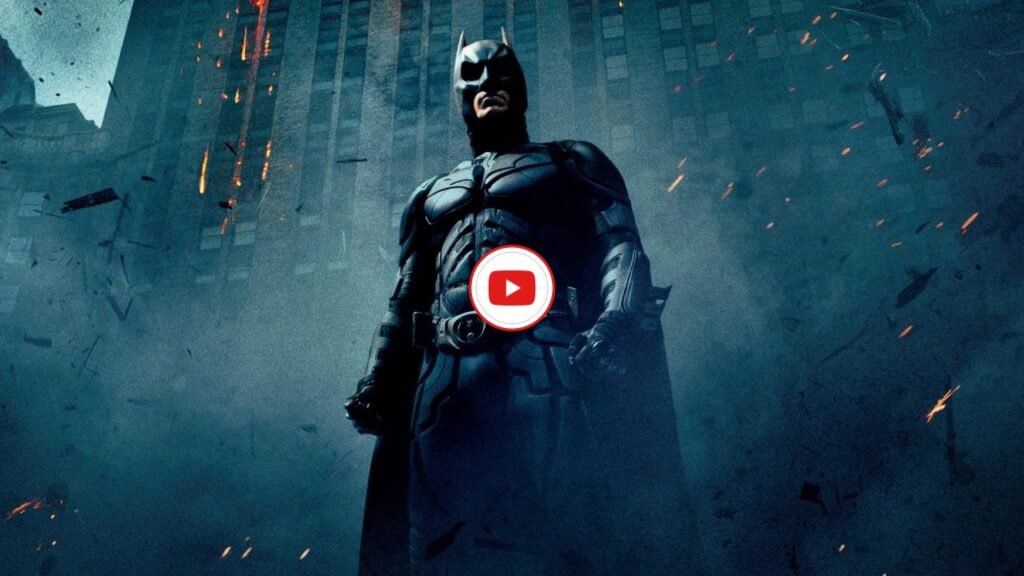
When The Dark Knight hit theaters in 2008, it did more than just entertain; it redefined what a superhero movie could be. Directed by Christopher Nolan and featuring a now-iconic performance by the late Heath Ledger, the film took the Batman mythology to new heights, weaving a tale of chaos, morality, and sacrifice. Unlike the colorful, often campy superhero films that preceded it, The Dark Knight was grounded in gritty realism, drawing influence from crime thrillers and philosophical dilemmas. It wasn’t just a story of good versus evil—it was a deeply layered exploration of how fragile order can be in the face of true anarchy.
At the heart of the film is Bruce Wayne, portrayed with nuance by Christian Bale. Wayne’s internal struggle is as prominent as his battle against crime. He isn’t just a billionaire in a cape; he’s a man torn between his moral code and the harsh realities of a city that seems to be spiraling into chaos. Gotham is portrayed as a character itself—grimy, corrupt, and teetering on the edge. Wayne’s evolution in The Dark Knight marks a pivotal point in his journey. The film asks whether the symbol of Batman can survive in a world that doesn’t play by the rules, and whether doing what’s right always means following the law.
But the most unforgettable element of The Dark Knight is undoubtedly Heath Ledger’s Joker. Ledger didn’t just play the Joker—he became him. Gone was the clownish villain of previous iterations. In his place was an agent of chaos, a terrorist with no clear motive beyond exposing the hypocrisies and fragilities of society. Ledger’s Joker is terrifying because he can’t be reasoned with. He doesn’t want money or power—he wants to destroy order and prove that anyone, no matter how good, can fall. His chilling performance won him a posthumous Academy Award, and it remains one of the most haunting portrayals in cinema history.
The film’s central conflict revolves around the philosophical battle between Batman and the Joker. One stands for justice, even if it requires personal sacrifice; the other wants to prove that morality is just an illusion. This ideological warfare plays out in several brilliant set pieces, including the unforgettable interrogation scene, the social experiment with the two ferries, and Harvey Dent’s tragic downfall. These moments aren’t just thrilling—they’re deeply thought-provoking, forcing the audience to confront difficult questions about human nature and justice.
Aaron Eckhart’s portrayal of Harvey Dent, Gotham’s “White Knight,” adds yet another layer to the narrative. Dent begins as a shining beacon of hope, someone who believes the system can work. But his transformation into Two-Face is both tragic and horrifying, showing just how thin the line between hero and villain can be. His descent is made even more painful by the loss of Rachel Dawes (Maggie Gyllenhaal), whose death marks a turning point in the film. Dent’s eventual decision to embrace chaos and vengeance serves as a dark mirror to Bruce Wayne’s continued pursuit of justice, even when the cost becomes unbearable.
Nolan’s direction in The Dark Knight is masterful, blending high-octane action with philosophical depth. The IMAX cinematography, especially in scenes like the opening bank heist or the high-speed chase involving the Batpod and Joker’s truck, adds a level of immersion rarely seen in superhero films. Hans Zimmer and James Newton Howard’s score elevates the tension, blending pounding drums with eerie strings to create a sense of unease that perfectly mirrors the Joker’s presence. Every technical aspect—from the editing to the practical effects—works in service of the story, never overshadowing the characters or themes.
What truly sets The Dark Knight apart from other films in its genre is its willingness to end on a morally complex note. Batman makes the ultimate sacrifice—not by dying, but by becoming a villain in the eyes of the public to preserve the symbol of hope that Harvey Dent represented. “Sometimes the truth isn’t good enough,” says Batman, “sometimes people deserve more.” It’s a chilling but noble decision that underscores the film’s core belief: that doing the right thing isn’t always about being celebrated, but about making hard choices that no one else is willing to make. It’s not a clean victory, but it’s a necessary one.
In the years since its release, The Dark Knight has remained a benchmark not just for superhero films, but for cinema as a whole. It challenged audiences, critics, and filmmakers alike to expect more from the genre. It wasn’t just a box office success—it was a cultural event, sparking debates, inspiring countless imitators, and raising the bar for what comic book adaptations could achieve. Even more than a decade later, it continues to resonate with viewers around the world. The Dark Knight didn’t just give us a great Batman movie—it gave us a cinematic legend.