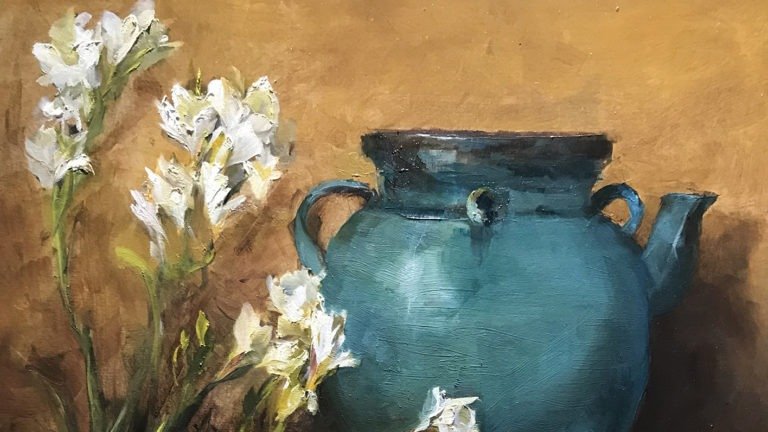
Essential Oil Painting Techniques
1. Underpainting
An underpainting is a monochromatic base layer that establishes the composition’s values (light and dark areas). Artists often use burnt umber or gray tones to sketch the initial structure before applying color.
2. Glazing
Glazing involves applying thin, transparent layers of oil paint over a dried layer to create luminosity and depth. Old Masters like Rembrandt and Vermeer used glazing to achieve rich, glowing effects.
3. Impasto
Impasto is a thick, textured application of paint, often using a palette knife. This technique adds dimension and expressiveness, as seen in Vincent van Gogh’s dynamic brushstrokes.
4. Scumbling
Scumbling is the process of dragging a dry, opaque layer of paint over a dry underlayer, creating a broken, hazy effect. J.M.W. Turner used this method to depict atmospheric landscapes.
5. Wet-on-Wet (Alla Prima)
This technique involves applying fresh layers of paint onto wet layers without waiting for them to dry. It allows for spontaneous, expressive strokes, famously used by John Singer Sargent.
6. Chiaroscuro
Chiaroscuro (Italian for “light-dark”) is the dramatic contrast between light and shadow to create volume and drama. Caravaggio was a master of this technique.
The Masters of Oil Painting
1. Leonardo da Vinci (1452–1519)
A Renaissance genius, Leonardo perfected sfumato—a technique of blending tones seamlessly. His Mona Lisa remains one of the most studied oil paintings in history.
2. Rembrandt van Rijn (1606–1669)
A master of light and shadow, Rembrandt’s portraits and self-portraits exhibit profound emotional depth through layered glazes and rich textures.
3. Johannes Vermeer (1632–1675)
Vermeer’s meticulous use of light and glazing created photorealistic intimacy in works like Girl with a Pearl Earring.
4. Vincent van Gogh (1853–1890)
Known for his bold impasto technique and vibrant colors, Van Gogh’s expressive brushwork revolutionized modern art (Starry Night).
5. Claude Monet (1840–1926)
A pioneer of Impressionism, Monet used broken color and rapid brushstrokes to capture light and movement (Water Lilies series).
Conclusion
Oil painting remains a dynamic and evolving art form, shaped by centuries of innovation. By studying the techniques of the Old Masters and experimenting with modern approaches, artists continue to push the boundaries of this timeless medium. Whether through delicate glazes or bold impasto, oil painting offers endless possibilities for creative expression.
Would you like a deeper dive into any specific technique or artist?